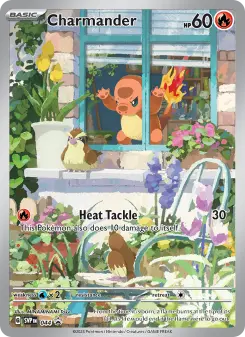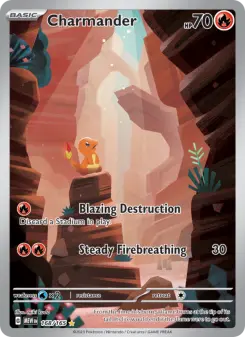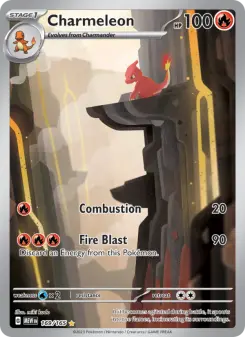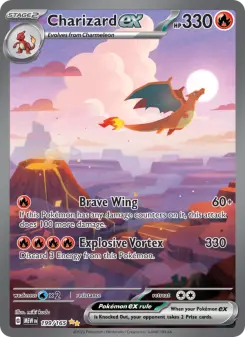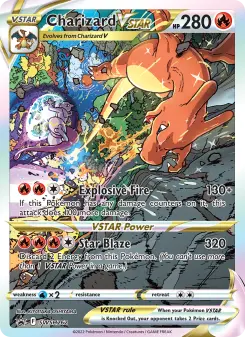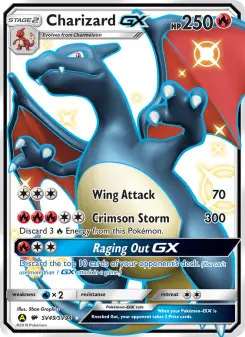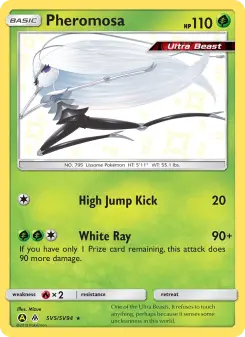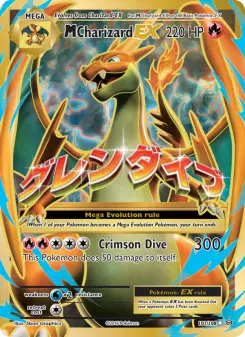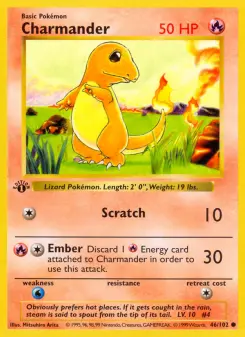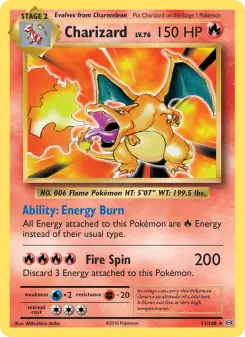
Build a Charizard binder by era, evolution, or artwork
Pokémon spotlightJuly 29, 2026

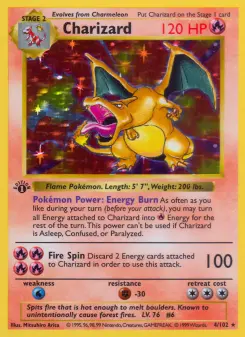
What belongs in a Charizard binder?
First decide where the evolution line stops:
- Charizard only: named Charizard cards and forms
- Full evolution line: Charmander, Charmeleon, and Charizard
- One per artwork: one card for each illustration, without every printing
- Favorites: the cards you like, regardless of era or rarity
Partner cards with Charizard in the printed name are an easy fit. Cameos are optional. If you include them, give them a small section of their own.
How many pages do you need?
The six-page starter holds 54 cards, which suits a favorites collection or a Charizard-only binder that is still growing.
Use two or three pages for a display of favorite artwork. A full English run, every printing, or the complete evolution line needs a larger setup. Plan those as separate sections before placing the first card.
Should you sort by era or evolution?
Era order is the most straightforward option for Charizard. Give vintage cards, the EX years, Mega cards, GX, V and VMAX, then modern ex cards their own sections. Promos can sit at the end of the era they came from.
If you care more about the evolution story, build around that instead. Repeat Charmander, Charmeleon, and Charizard across each row, or give the full line a three-page spread.
Where do variants and missing cards go?
Decide whether a different foil, stamp, language, or corrected printing gets a separate slot. If it does, keep the variant beside the base card so the difference is easy to see.
Leave one page after each major era. For a missing card, reserve its pocket and save it rather than closing the gap with an unrelated card.
Build it in Card Binder Ideas
Open the six-page binder above and build the first page you want to see. Add era dividers or evolution rows behind it. If your rule needs more than 54 pockets, use Adjust setup.
An example below can also give you a page order to remix.